
OSINT platform free trial
Try the world's most popular OSINT platform for free. Elevate your enterprise investigations with unmatched accuracy.
Get Free Trial

‘We’d go out on a night shift, and you’d be like ‘Let’s go out and catch people doing bad things’ and we did that… These days, you've got to be very computer literate.’ – James, a 59-year-old ex-Police Constable. [Source: CIPD]
The briefing room is the heart of a UK police force, whether it’s in a city full of weekend fallout or a rural station serving hundreds of square miles. Before most people have switched on the kettle, officers drift in from the cold, shaking off the morning mist with a strong brew. Chairs scrape across the floor as incident sheets and overnight reports pass from hand to hand. The low murmur of chatter bounces off walls lined with whiteboards, duty rosters, neighborhood maps, and notes from the night shift. If you watch procedural dramas like Line of Duty (or in more retro terms, The Bill), you’ll know this is where everything really gets started. This is the calm before the calm before the day’s unpredictability; a moment to read the room, read the risks, and brace for whatever the shift decides to throw your way.
Non-British readers (or those who grew up in the last century) tend to imagine UK police forces as ‘bobbies on the beat’ in custodian helmets: chatting to shopkeepers and breaking up minor scuffles, exclaiming “you’re nicked” for good measure. Nostalgia still shapes public perception, and occasionally government policy. Still, it often barely reflects the modern officer’s workload. Real life isn’t Sun Hill, and real officers are unlikely to ever encounter AC-12 - or drop one-liners like Adrian Dunbar. Some, however, still wear the helmets.
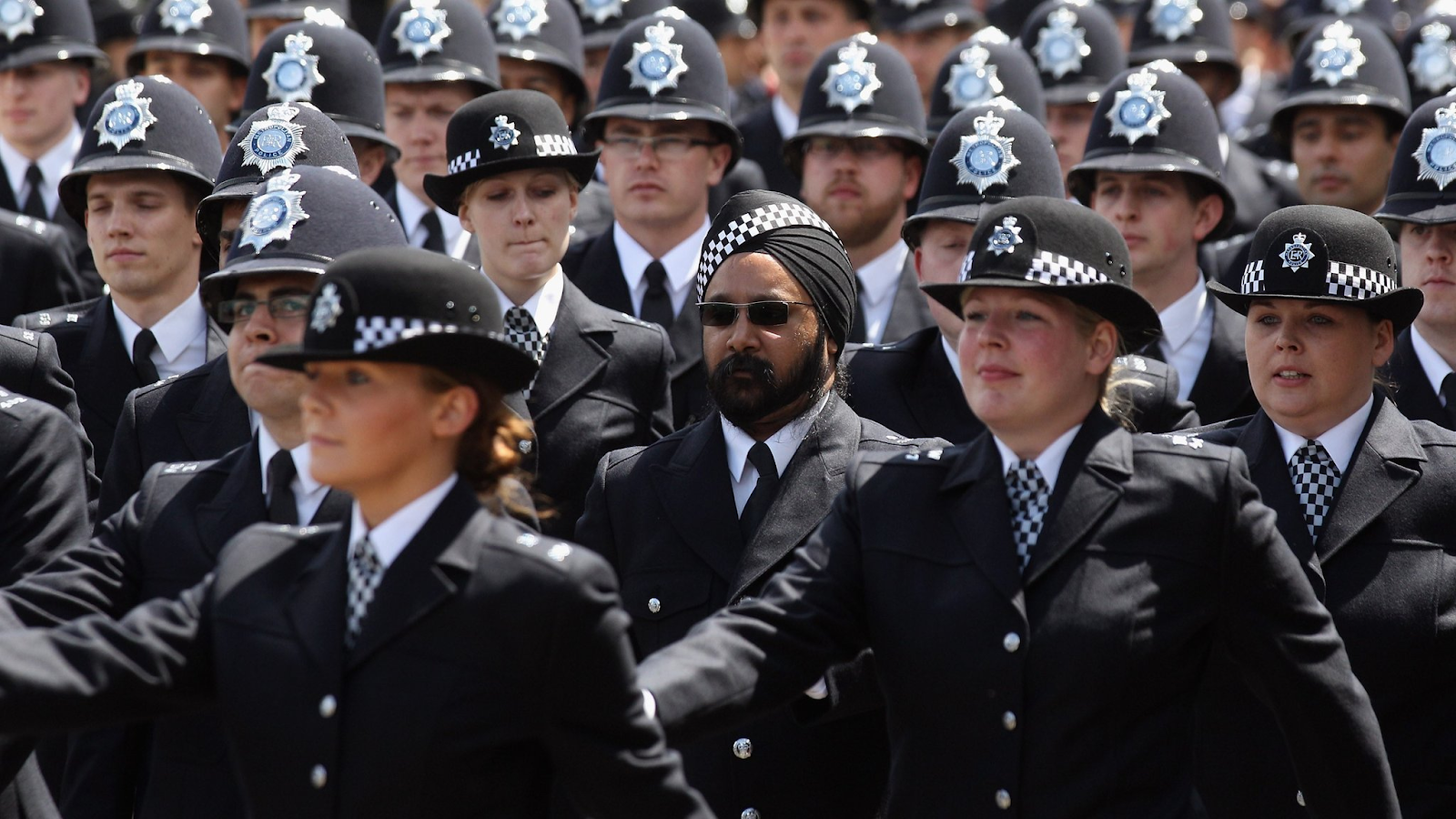
For one, a snapshot of some forces found that non-crime, no-immediate-threat mental health incidents could be consuming 1.6 million officer hours per year. The 2025 Policing Productivity Review, moreover, suggests that the types of crimes UK police deal with day-to-day have changed dramatically in the last two decades since the turn of the century. Fraud has exploded to 17% of demand from around 3% of police-recorded crime in 2003. Violence with injury has nearly doubled from 5 to 12%, and stalking and harassment - barely statistically recognised 20 years ago - now makes up about 10% of recorded crime. The 2024/5 State of Policing report from HMICFRS backs this up. Police are increasingly spending time on “complex and resource-intensive issues”, such as online exploitation and violence against women and girls. Between safeguarding, missing persons, digital intel checks, public order alerts, non-crime demand, cybercrime and safeguarding, UK forces have their hands full in a thoroughly modern way.
‘We need a major shakeup… [from] the pre-internet era, when the handheld calculator was the height of innovation… [to] modern threats such as fraud, riots and terrorism, which are growing in prevalence and complexity.’ – Gavin Stephens, National Police Chiefs’ Council (NPCC) Chair. [Source: Guardian]
One thing is clear from these shifts in crime. Across all of these emerging threats runs a single, unavoidable theme - they all begin, spread, or escalate online. The traditional ‘burglary, theft, and street disorder’ model that occupied the old-time bobby is unsuited for a digitally-integrated, complicated caseload. The heart of a neighborhood officer’s role hasn’t changed: upholding the thin blue line, preventing harm, and responding when people need them are still at the core of everything that gets started in the briefing room. However, modern UK policing needs a digital, analytical, and intelligence-driven boost.
That’s exactly where open-source intelligence (OSINT) comes in. Faced with the 21st century, UK officers are gaining skills that go beyond what the beat bobby ever dreamed of. They’re plugging into OSINT Industries.
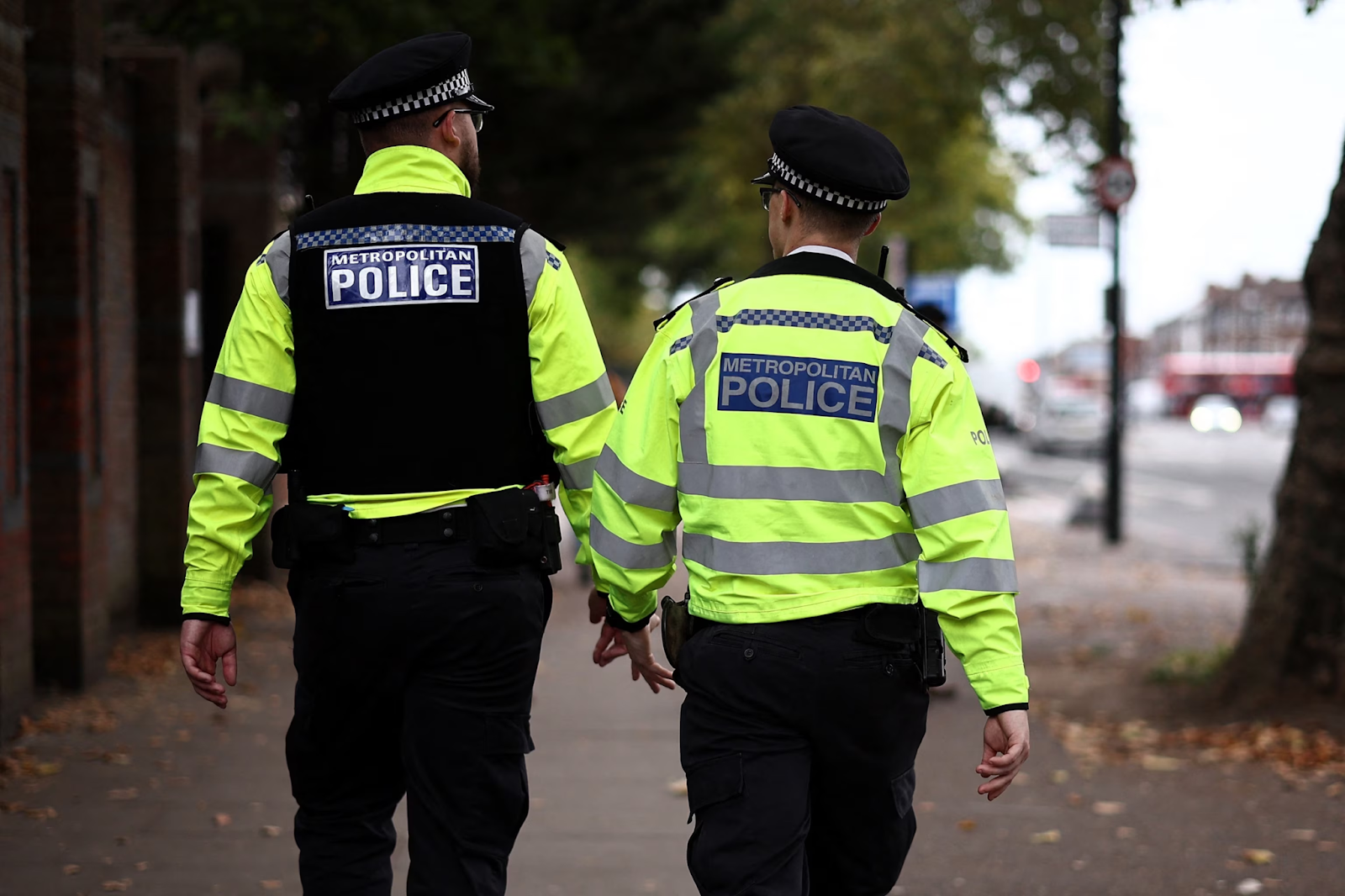
‘You don’t always need the latest AI to make a difference, sometimes the right solution already exists, but people just aren’t aware of it’. – Dr Bas Testerink on UK police innovation, National Police Lab AI (NPAI). [Source: Science Magazine]
Caroline P.’s* Midlands police force covers a mix of old industrial towns, rural farmland and a major motorway corridor. It’s a clear example of how the UK’s modern cops are evolving.
Caroline’s career has seen the ground shift under her feet. Today, she and her team face county lines carving through market towns, online grooming spilling into the physical world, organised crime groups using the motorway network to move people and drugs, and offenders she’ll chase not through the streets, but across social media profiles, gaming accounts, and encrypted apps like Signal and Telegram.
The way these forces come to OSINT Industries usually goes like this. One quiet afternoon, between writing statements and following up with victims, an officer like Caroline will send us an email from an official police account. There’s no need to jump through hoops or clear red tape to access free law enforcement access; simply making an application and proving to us that she was an officer or analyst at work is enough to get started - and notice the impact immediately.
The change is small, but the difference is huge. Where before, intelligence requests to get the data OSINT Industries brings back could mean a long wait, Caroline can now pull data herself with a search. OSINT is a far quicker and easier way to get cross-platform usernames, connected accounts, linked associates, hints at movement and behaviour and more. This also means when a case reaches specialist units, Helen can arrive with more predetermined answers and fewer questions to solve.
It wasn’t long until Caroline contacted us again. This time, she reached out to describe the impact OSINT Industries was having on her investigations. Here’s how our tool has become integral to solving the modern cases landing on a Midland force’s desks.
“I had an idea it would probably be selling drugs… I agreed because I was scared of him… He knows my area – I was scared.” – Boy X, a 16-year-old North Londoner blackmailed with a £55 debt. [Source: Guardian]
Many 21st-century crimes are uniquely brutal but shockingly universal. Even rural forces will encounter ‘county lines’ operations: a digitally-facilitated UK drug-trafficking model where gangs traffic hard drugs like heroin and crack - the latter previously rare in the UK - from big cities into declining market towns and villages. These highly organised, tech-enabled drug networks make simple street-level dealing look quaint.
Using dedicated mobile phone ‘deal lines’, these violent pushers operate on the logic that children as young as 12 are more malleable, and less likely to be caught. Groomed online, trafficked and exploited with the promise of fast cash or friendship, young victims find themselves miles from home in ‘trap houses’ that might be homes of vulnerable adults the gang has taken over. Once isolated, they’re beaten, threatened, or blackmailed to mule drugs and cash throughout UK counties.
Between July 2024 and June 2025 alone, police closed 2,323 ‘county lines’, arrested 6,293 individuals, and referred 3,236 people for safeguarding.
In the midst of this timeframe, Helen’s team was investigating new intelligence on a gang known as ‘Black Country Boyz’*. They had received a mobile number for a ‘line phone’ used in the gang’s supply of cocaine and more between a large metropolitan area and a smaller cathedral city on the county’s rural outskirts.
The concept of a ‘line phone’ is key to the dynamics of county lines operations. A ‘line phone’ is the central mobile number used as a ‘deal line’; namely, to sell drugs. Potential customers text or call the line phone to place orders. From here, the gang dispatches ‘runners’ - often their term for exploited children - to deliver. The numbers of victims drawn into this gang’s web, the numbers of lives they scarred as collateral damage, were growing at an alarming rate. A line phone number was effectively a smoking gun.
Who in particular operated the ‘Black Country Boyz’ line, or who in particular operated this line phone, was not then known to Caroline. As the number holder has never come into contact with police - as is commonly the case with gang activity that involves young victims - the usual checks and searches on UK police intelligence systems were unenlightening. Time for a search on OSINT Industries. A search conducted on our OSINT tool located a number of accounts, including a linked WhatsApp account; as law enforcement users often find, a linked WhatsApp account is a great way to put a face to a name.
The WhatsApp account provided, above his Bio, a “clear image” of “Alex”*. This profile picture was enough for Caroline to employ more heavy-duty technology: facial recognition software. OSINT is far from the only way British police are meeting the modern world. Facial recognition technologies like live facial recognition (LFR) have helped secure over 1,000 arrests for serious crimes and sex offenses. Having verified Alex’s identity as the mobile number’s owner, Caroline was able to uncover his previous convictions for organized sale of cocaine too. Now, she had cause to go further.
Caroline’s team conducted more SOCMINT searches, revealing more profiles and photos that could be easily matched to verify the accounts’ owner. Armed with OSINT, the team could then apply for information from social media companies that are usually unforthcoming with users’ data. Via private account information and IP activity they received, Caroline could prove the drugs line number was affiliated to a Facebook account: “Alex Potter”. On Facebook, we’re much more likely to share details like full names and locations that are just what UK police need to make a solid ID - and arrest.
Alex was booked within a few weeks. He was charged with conspiracy to supply class A and B drugs, and possession with intent to supply. Without an OSINT mobile lookup, he might never have been caught. Alex was soon sentenced to 5 years in prison.
At his arrest, officers recovered cocaine, cannabis, and the line phone.
“If this is found I have committed one of the worst atrocities in British history or I killed myself…” – Thomas Wyllie, jailed for plotting a mass shooting in Yorkshire. [Source: Guardian]
Britain’s relationship with firearms is idiosyncratic. The 1996 Dunblane school shooting, a national trauma in which 16 Scottish children and a teacher were murdered, led to a near-total handgun ban and some of the world’s strictest gun laws. For the most part, the Firearms (Amendment) Act successfully reshaped policing and public safety, making UK firearm attacks extremely rare. Subsequent incidents have shown offenders turning to alternative weapons like crossbows, but there has never been another Dunblane.
However, a growing issue is encroaching on the UK’s peaceful firearms environment.
For UK police, online radicalisation has become another common criminal denominator. Dangerous views that used to be the reserve of fringe hate groups are easily absorbed by digital-natives picking up fragments of extreme ideology as they scroll. From here, extremist violence can occur en-masse, with public-space flashpoints like hotel ‘protests’ - fuelled by misinformation and social media agitation - igniting within hours. Here, officers then face the task of preventing all-out disorder. However, these incidents are much more straightforward to handle than an erratic generation of extremist ‘lone wolves’ who can strike with little to no warning.

Lone-actor assaults are both ideological and deeply personal. For these reasons they are prepared in secret, with minimal openings for intervention. Fighting them is emotionally taxing, and media-sensitive to say the least.
Adding firearms to this mix would be disastrous.
In early 2025, Caroline’s team received a notification. An unfamiliar subject was importing something unusual to their home address. It appeared to be component parts for a gun.
The notification included an address, email and phone number for the subject. Jacob* was living in Caroline’s county, but had no previous police footprint to speak of. Running the number and email address through OSINT Industries was the obvious first move to make an assessment.
Both identifiers yielded results: a Facebook account, a WhatsApp profile, and a Snapchat profile too. Additional web accounts were linked to the same usernames. Increasingly, as Caroline got to know Jacob online, she realised his digital life was getting more and more disturbed. He had succumbed to “a dark right wing ideology”. Jacob had mentioned a college course that he attended, but had dropped out after only a short time. Contacting Jacob’s college, Caroline found out the reason why: as the student fell down the rabbit hole of radicalisation, concerns were raised about his “potentially violent mindset”.
Alarm bells rang in the team’s minds. Quickly, they acquired a firearms warrant to search Jacob’s address. What they found was a very modern nightmare.
A 3D printer was in the process of printing over 300 component parts for firearms, and more. Officers believe Jacob was producing these parts “in order to conduct a random act of violence.”
With officers recovering the means and OSINT uncovering the motive, Jacob was arrested. He was charged and remanded into custody. He is now awaiting trial. Caroline told us “the use of OSINT Industries was crucial… and allowed intelligence to be developed quickly and effectively to target the subject.”
“Our analysis shows that X’s algorithmic design and policy choices contributed to heightened risks… observed in several locations across the UK last year, and which continues to present a serious human rights risk today.” – Pat de Brún, Head of Big Tech Accountability at Amnesty International. [Source: Amnesty]
Today, what happens in digital spaces will shape what hits the briefing room. Rolling with these punches means updating the UK’s model of policing towards intelligence and analysis, and that’s just what forces like Caroline’s are doing with OSINT Industries.
County lines gangs rely on ‘line phones’, inherently trackable through mobile-based OSINT. Radicalisation is now overwhelmingly driven online, scrawled across social media if you know where to look. Disinformation and even coordinated agitation can move across social platforms far quicker than official communication, leaving officers reacting to narratives they couldn’t see forming. OSINT can help forces to become proactive; to target those who foment violence offline with online activity. UK police can even use OSINT to do what platforms refuse to do - take down those who cause harm IRL with their posts.
Yet protecting a public that lives in both the real world and the digital one doesn’t mean completely departing from traditional ways of doing things. Caroline’s team are still busy, still following the timeless instincts of policing. However, now they pair them with new tools. UK bobbies have the same old commitment to protecting the vulnerable that comes with neighborhood policing, just better equipped for the world as-is.
In many ways, the intersection of digital behaviour and real-world harm is the UK officer’s new beat. OSINT Industries is proud to assist them, every step of the way.
Inspire Others
Educate about what OSINT can do.
Positive Publicity
Share your success with the world.
Support #OSINT4Good
Be part of the OSINT story.