OSINT platform free trial
Try the world's most popular OSINT platform for free. Elevate your enterprise investigations with unmatched accuracy.
Get Free Trial
"Of course there is crime like in any country, but the stats in Switzerland are one of the lowest in the world. People still leave their doors unlocked…” – Rosamund Tagel, Zurich resident and concierge business manager. [Source: BBC]
Switzerland’s longstanding reputation for safety is almost part of its landscape, as natural as snow-capped mountains or punctual trains that run with a watchmaker’s exactness.

The Swiss homicide rate hovers around 0.5 per 100,000 people, with the rates for violent crime like robbery hovering at 21 cases per 100,000 people, making Switzerland - according to the Global Peace Index (GPI) - the 10th safest country in the world. Some say the lack of violent incidents comes from the unique Swiss relationship with firearms: most Swiss men keep their service rifles at home after mandatory military service, yet gun violence is rare. Others point to high trust in law enforcement and the justice system, or a high standard of living with strong and extensive social safety nets for those who would otherwise turn to crime. As always, minor crimes like pickpocketing and shoplifting occur in tourist areas, or canton capitals like any European metropolis. Incidents of serious physical assault, however, are unusual enough to always make the news.
When on December 21st 2015 fire broke out in the sleepy village of Rupperswil, firefighters’ discoveries caused shockwaves. The house fire had been deliberately set, to conceal the bodies of 48-year-old Carla Schauer-Freiburghaus, her two sons aged 19 and 13, and her older son’s girlfriend, all dead by violent means. The crime had been a particularly brutal and calculated robbery. After the perpetrator gained entry in the guise of a school psychologist, he had tied up the three young people and forced Carla to withdraw money from a string of local banks. Only then had he murdered all four victims.
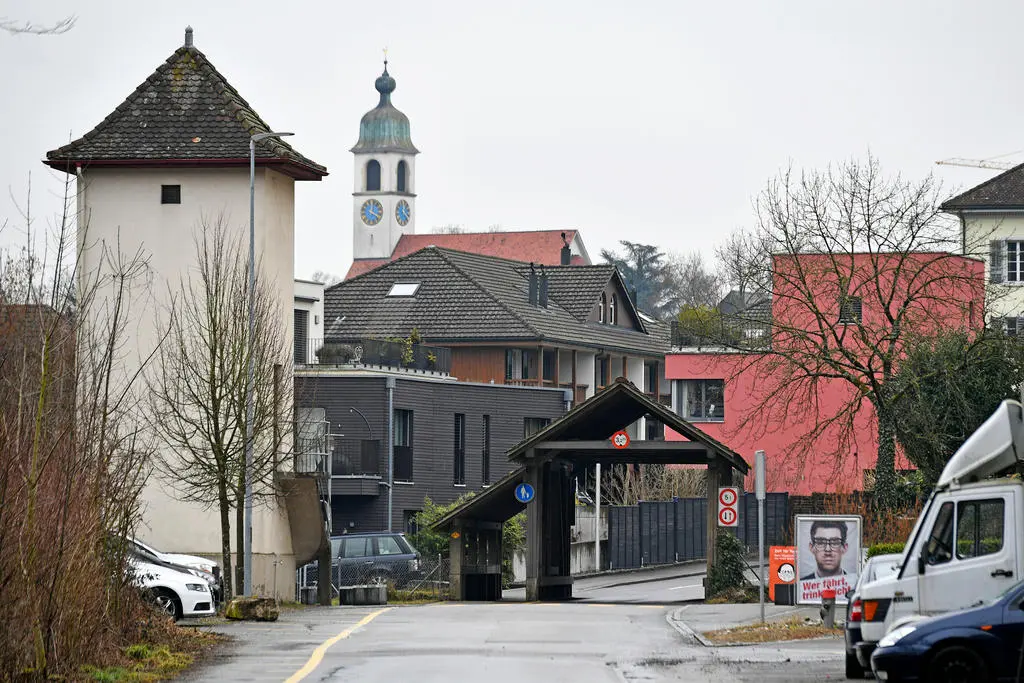
The largest police investigation to date in Swiss history included a 100,000-franc reward for information that caught the ‘Beast of Rupperswil’. However, it was technology that caught Thomas Nick.
There was very little immediate evidence and no immediate suspects, so police went digital. Any suspicious cell tower pings - like Nick’s - could be the killer. Likewise, Nick’s internet activity gave him away. His web history showed disturbing content related to violence, control and abuse, matching the methodology police saw in Rupperswil. Police cross-referenced trace DNA found at the scene, and it was a match. Nick was arrested in a Starbucks in Aarau: a local man with no prior criminal record who had worked as a youth football coach.
There would have been little reason to suspect Nick without his digital footprint; no reason to suspect he was the source of the mystery DNA. He was found guilty on all counts and sentenced to life imprisonment.
What’s more, Swiss digital investigative methods are only getting stronger, including advances in open-source intelligence (OSINT). Swiss investigators are using OSINT to crack high-profile cases, from illicit markets to trafficking networks to violent abusive crimes like Thomas Nick’s. As nations begin to recognize the strategic value of OSINT and are working to formalize collaboration in the field, Switzerland has become recognized for its prowess, participating in the OSINT Center for Excellence.
"One big cultural influence is our history as a 'nation by will', with a lot of minorities (cultural, ethnic, language etc), resulting in a high sensitivity and acceptance of compromises…” – Res Marty, Geneva resident and chocolatier. [Source: BBC]
Switzerland has always been safe, but it's getting even safer. There’s a growing consensus that digital-era crime requires digital-era methods, and Swiss law enforcement are exemplifying that push into the future - with help from OSINT Industries.

“OSINT is necessary for the work we do as a cybercrime unit…” – Anna G., Cybercrime Unit Inspector [Source: OSINT Industries]
Anna G. is an inspector working in a Swiss cybercrime unit. Her team is responsible for any and all criminal investigations that involve the digital world: smartphones, computers, digital networks, social platforms and OSINT. Across her desk, she’ll receive cases of hacking, online fraud, identity theft, cyberstalking, ransomware attacks, and other forms of digital exploitation, but also cases of physical crime. Here, it’s all about electronic evidence, and collaborating with other law enforcement agencies, other cybersecurity experts, and even international organizations when it comes to cross-border crimes.
Also, Anna’s role requires top-drawer forensic OSINT skills. She discovered OSINT Industries while searching Google for OSINT tools that might help facilitate an investigation she was working on. Through our portal for law enforcement officers, she set up a call and “that was it.”
OSINT Industries has since become key to Anna’s workflow, with phone numbers and email addresses making up the bulk of her searches. She emphasizes that modern life means most suspects leave “very few ‘physical’ traces”, so “we rely a lot on the digital traces that are reported to us from the plaintiff.” The primary goal in most of Anna’s investigations is the identification of perpetrators, making OSINT tools “super useful” when her team needs to rapidly find clues about an identity - often before it's too late.
So when OSINT Industries proved pivotal in solving one of her canton’s rare violent crime cases, Anna reached out to share her story.

“At that time of the investigation, we had no suspects…” – Anna G., Cybercrime Unit Inspector [Source: OSINT Industries]
The quiet everyday calm of a small town in Anna’s canton was shattered by one of those rare violent attacks.
The crime was robbery and attempted kidnapping to retrieve valuable goods. In translation for non-law enforcement, a group of assailants set their sights on an innocent local man, intent not only on robbing him of his belongings, but forcing him into captivity for further gain. He could have been held hostage; with echoes of the Rupperswil robbery’s horrifying modus operandi, this victim’s fate could have been like Carla Schauer-Freiburghaus, driven from ATM to ATM to extract everything he had - or worse.
What they hadn’t anticipated was the victim’s resolve. He fought back, successfully resisting all attempts to overpower him. Such fierce defiance meant the robbers were unable to carry out the abduction as planned. Frustrated and under pressure, the attackers abandoned their disrupted scheme and fled.
The incident left a lingering unease in the community, although the thieves escaped with little more than a stolen bag. In this snatched bag was a credit card. So far, the investigation was without suspects - but it didn’t take long for the attackers to get going.
The victim got an unexpected SMS: a two-factor authentication request, asking him to authorize a payment he didn’t remember making. It couldn’t have been him. After all, the card was no longer in his possession.
The credit card company had intervened before the victim could, and gave Anna her first lead. Cooperation from the company in its own investigation identified two data points: the site on which the payment had been made, and the email address implicated in the attempted transaction. A connection between the stolen card and an identifiable digital identity opened a pathway to pursue somebody for this crime; a pathway that began with an OSINT Industries search.
Among many models of identity tracing that OSINT excels in, tracking a path from transaction to identity has become vital for catching suspects. What once seemed like an impossible challenge for law enforcement - linking an anonymous actor to an identity via secure and often encrypted payment methods - is now feasible, thanks to the growing sophistication of tools like OSINT Industries. Finding identities through this pathway has helped take OSINT from a niche toolset to a mainstream weapon in the fight against cybercrime and illicit markets in Switzerland. Investigators have used it in darknet arrests, in coordinated crackdowns on trafficking, and as part of large-scale international operations like Operation Genesis. There, as early as 2002, the transaction-identity pipeline was securing 320 indictments and 124 convictions for child pornography
Here, the transaction-identity pipeline could find the suspect in Anna’s violent robbery. She immediately ran the email address linked to the stolen credit card through OSINT Industries.
One of the results, she describes, “gave us a name and surname and, therefore, the beginning of an identity.” From here, Anna could dig deeper, instructing her team to cross reference other investigative elements that suggested the individual named took part in the robbery in question. From no suspect at all to a name and identity, all in a single search.
Anna now had an attempted payment on a stolen card, linked to an email address under the suspect’s name. OSINT Industries had, in her words, “a double role in this affair”. Not only had OSINT given her team a foothold on an identity, but it had corroborated and strengthened the stolen card evidence the team already had.
The suspect was arrested not long after.
“It is not that easy to leave zero trace in the digital world. Some specific groups are very good at it, but humans being very often quite lazy, OSINT must not be underestimated…” – Anna G., Cybercrime Unit Inspector [Source: OSINT Industries]
This story proves Anna right to emphasize the power of forensic OSINT. A familiarity with OSINT has equipped her team with the ability to get impressive amounts of information from just a phone number - or, as in this case, an email address.
However, its not just OSINT that took her from no suspect to an identity so quickly, but access to OSINT Industries. Before our tool, Anna describes making OSINT searches that were “slower, took much more time and were less complete”. It’s inevitable that an investigating team will need to do manual OSINT work when seeking justice for victims. Yet Anna finds a tool like OSINT Industries “really helps orienting the researches in the right direction”. The web is an enormous place; by only targeting the services, social networks and connections that our tool has flagged as valuable, she and her busy team waste less energy, effort and (most crucially) time.

There may not have been physical traces at Anna’s crime scene, but in the digital world, everyone leaves something behind. An attempted payment that triggers a text was insignificant enough to the suspect that he allowed it to go through. It’s a fragment that seems meaningless on its own, but pieced together, it formed a pipeline straight back to the culprit. How many criminals are lazy enough to make the same mistake? According to Anna, the number is surprising.
With OSINT Industries, Anna G. was able to prevent a violent criminal remaining at large. OSINT is how Swiss law enforcement are working smarter than ever, and it’s this quiet, meticulous work that helps Switzerland maintain its reputation: as one of the safest places in the world.
Inspire Others
Educate about what OSINT can do.
Positive Publicity
Share your success with the world.
Support #OSINT4Good
Be part of the OSINT story.